BeePeeking
  • Blog
  • Portfolio
  • Biodiversity
  • Biophilia
  • Go Organic
  • About
  • Vision
  • Resources

Beneficial Insects for Garden and Pest Control

6/25/2016

0 Comments

 
Picture

Guest Post by Sam = Organic Lesson

In the past decade, the plight of the honey bees has become a very important issue, and rightly so, as they play an essential part in the growth of crops and produce. Many do not realize that bees aren't just there to produce honey. They also play an important part in pollinating surrounding crops. One way in which we are detrimentally affecting the bee population is through the use of chemical pesticide. As tempting as it is to use such a method to eradicate pests in your backyard, it should be noted that not only is pesticide harmful to the bees, they are also harmful to you as well. If you are a gardener who wants to use a natural control method instead then consider the use of beneficial insects.
Picture
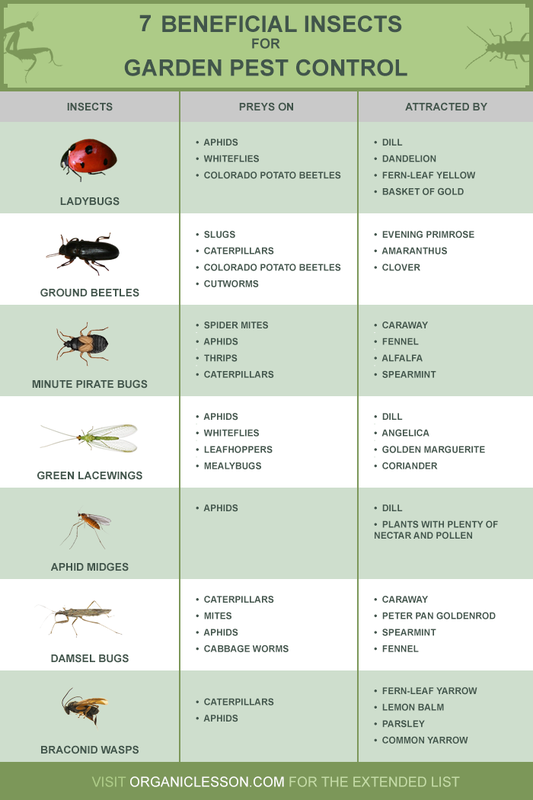
As the name implies, beneficial insects are bugs that can help eradicate common garden pests without doing any damage to your garden produce. Not all insects are bad. There are many such as the examples listed in the infographic that can be very effective at getting rid of common pests like aphids, caterpillars, and spider mites. Who knew the beautiful ladybug could be so effective at getting rid of aphid infestations in the garden? Other than the benefit of keeping things organic, using these insects can also be a great way to save money. Chemical pesticide is only going to get more expensive moving forward so why not use a method that takes advantage of the natural resource around you? If you are lucky then some of the beneficial insects could be native to the area you live in so all you have to do is to make your garden an attractive area for them to roam. One last thing to keep in mind is that there really isn't a way for pests to resist these bugs. According to the Pesticide Action Network, more and more insects and weed species are developing resistance against pesticide. With beneficial insects, however, the pests are being eaten so they really have nowhere to go.

If you are a gardener with a backyard then start taking action now. Help sustain the local population of bees in your area by sticking to a natural pest control method.
Sam Choan is a gardening enthusiast who enjoys sharing his experience on gardening and sustainability at his personal blog Organic Lesson. During his spare time, Sam grows a number of herbs in his indoor garden and finds ways to promote green living.
0 Comments

Bumblebee, honeybee, or Wasp?

3/5/2016

1 Comment

 
Picture
The Difference Between Honeybees and Bumblebees
 
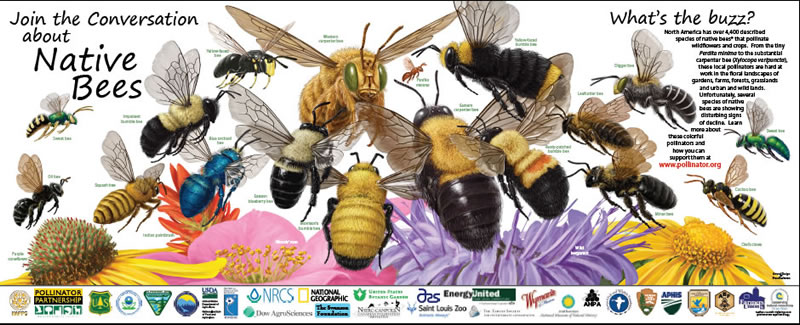
Did you know that there are more than 4500 species of bees that live in the US and Canada, and worldwide over 20,000 species have been identified?
 
Many urban dwellers have not had enough experience with backyard pollinators to easily tell the difference between bees and wasps. For me, it is similar to how you can tell a cat from a dog, or robin from a spotted towhee–not only do they look different, but their movements and habits are unique.

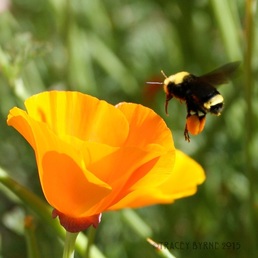
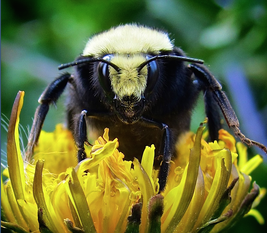
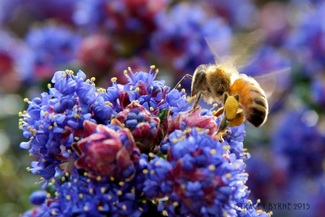
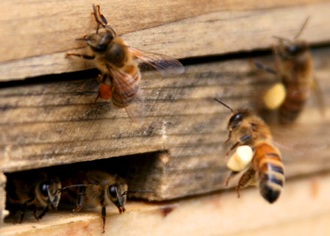
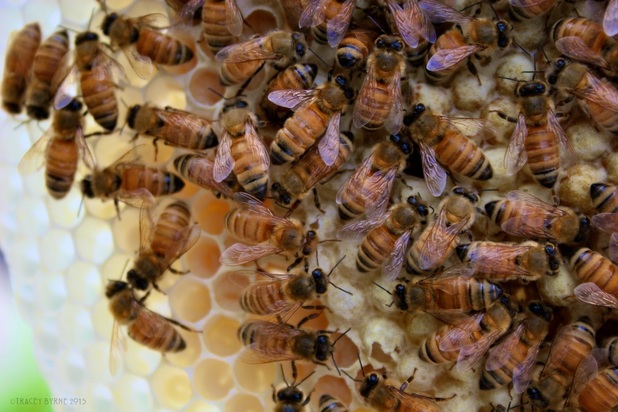
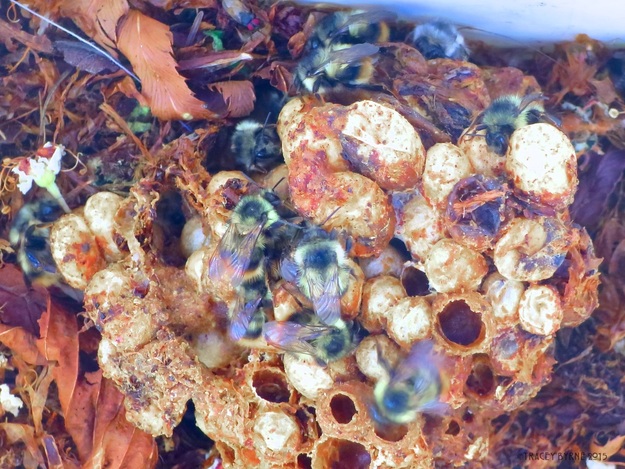
You can often ID your backyard bugs by where you find them and what activity they are engaged in. You will find medium-sized golden-brown to black honeybees (photos right) busy flying back and forth between flowers, loading up on pollen and nectar, and zipping back to their hive. Bumblebees (photos left) are generally larger and fuzzier that the honeybee, many with black, orange, or yellow stripes. I consider bumblebees to be the “teddy-bear” of bees, and the most photogenic. Honeybees tend to be sleeker and less hairy than the bumblebees, but both carry pollen on their back legs.
Picture
Picture
Picture
Bumbleebees stage left & honeybees stage right
Picture

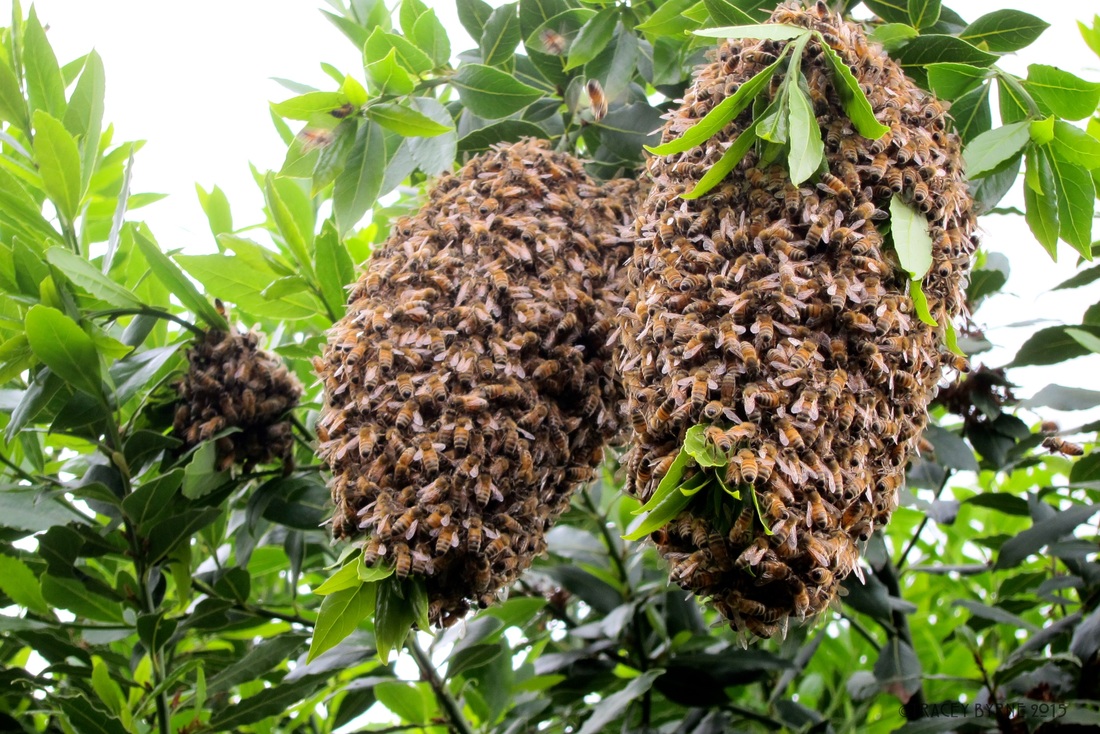
Honeybee Swarm
Swarming honeybees are docile; they have nothing to protect–as they are merely scoping out the real estate in your neighborhood. The honeybee swarm consists of a healthy queen and upwards of about 10,000 of her workers. Call your local poison-free bee-guy to come collect them, and they will be relocated to a good home.
Picture
Of all the bees, we know the most about our domesticated non-native European honeybees, not only for their pollination efforts but also for the food, candles, and medicinal products derived from their honey, pollen, wax, propolis, and venom. Honeybees are the outliers in the bee family. They, along with bumblebees, are social insects, which means that they work together in the hive to raise their young and make honey. Most other bees are solitary, do not care for their offspring, and a whopping 70% of all bees live in the ground.
Picture
Bumblebee nests can be found in the ground, in abandoned birdhouses, or in attics. Their nests are nothing like the honeybee's neat and tidy honeycomb (top); instead, they look really primitive, and a bit cobbled together (below).  The bumblebee queen hibernates over the winter, so bumblebees need gather only enough nectar and pollen to raise the brood each season. Honeybees must store enough honey and pollen to allow the workers and queen to survive the winter.
Picture

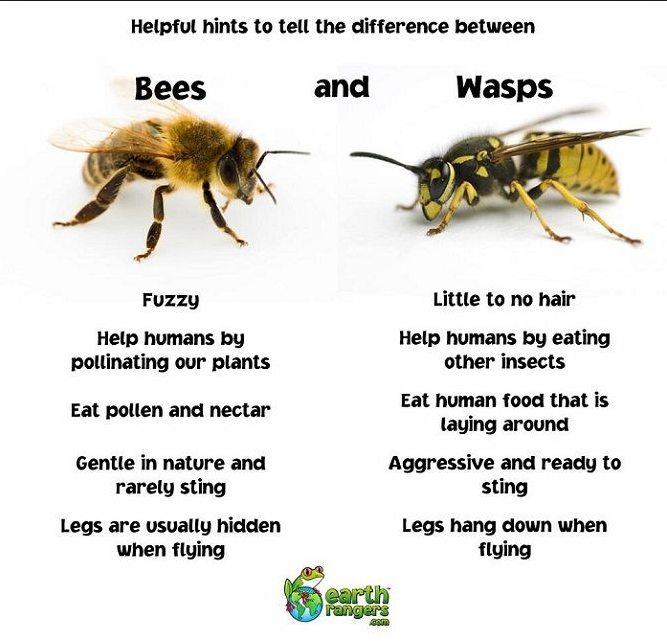
Bee or Wasp?
Bees: fuzzy, friendly, busy-but not aggressive, flight patterns are direct. Variations in size and color from golden brown to green to black, thick legs with pollen baskets, nectar gatherers; nest in ground, woodpiles, hives, attics, and walls.

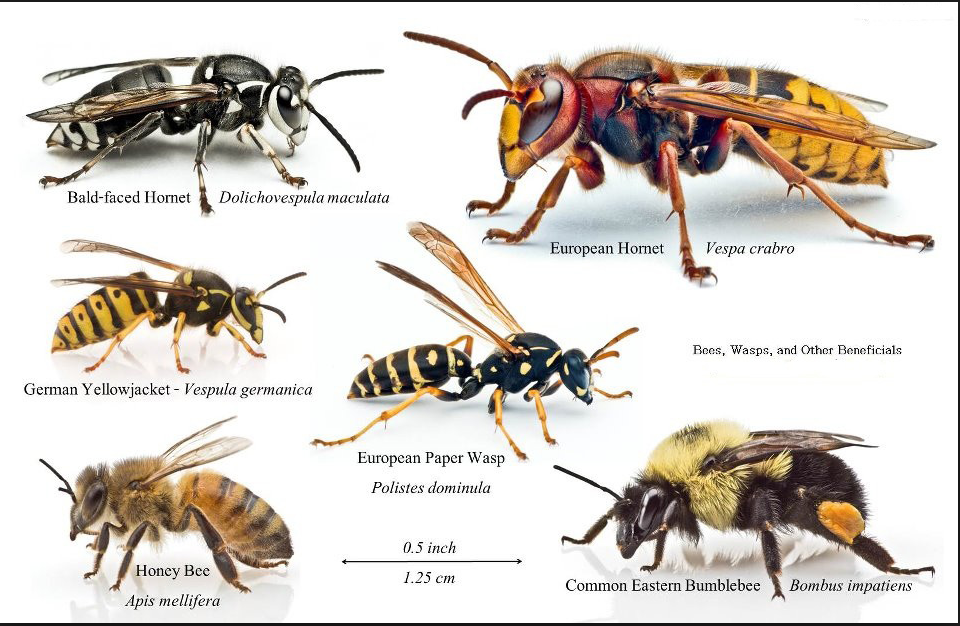
Wasps and hornets: often aggressive, many carnivorous, striking yellow-black or white-black pattern that shouts CAUTION! Shiny, long thin legs (no fuzz or pollen basket-), wasp-waist, annoying at picnics, zig-zag flight pattern, paper nests found in trees or under eaves.
Picture
poster by Alex Surcica
Picture
Want to know more? Check out the book "The Bees in Your Backyard" by Wilson and Carril; for a peek inside my beehives, and more images of the wild things that visit my backyard click here.
1 Comment

Mid-Summer Backyard Bug Report

7/12/2015

0 Comments

 
Picture
Picture
Picture
Picture
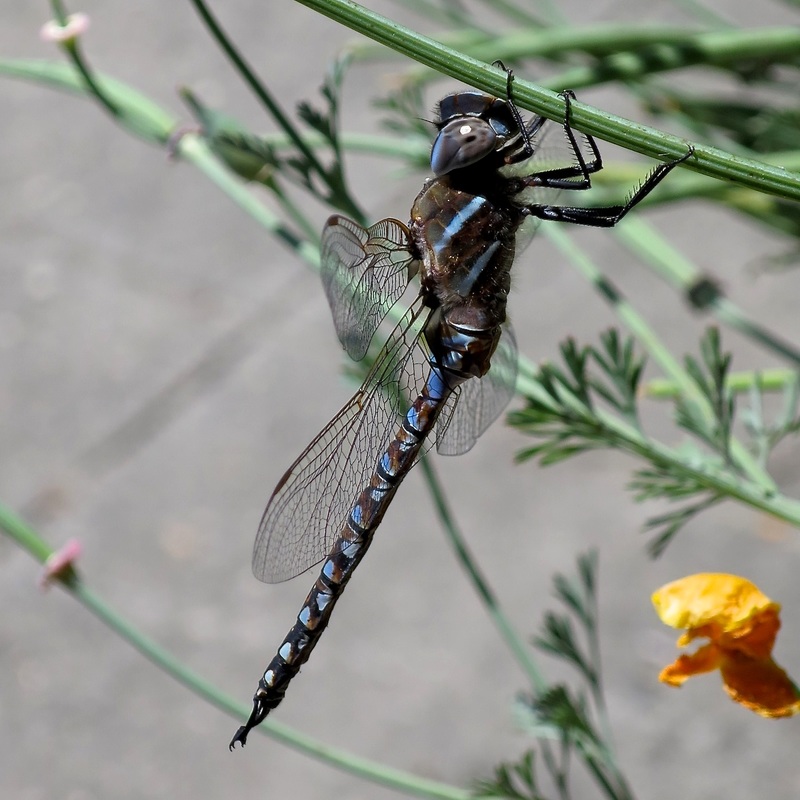
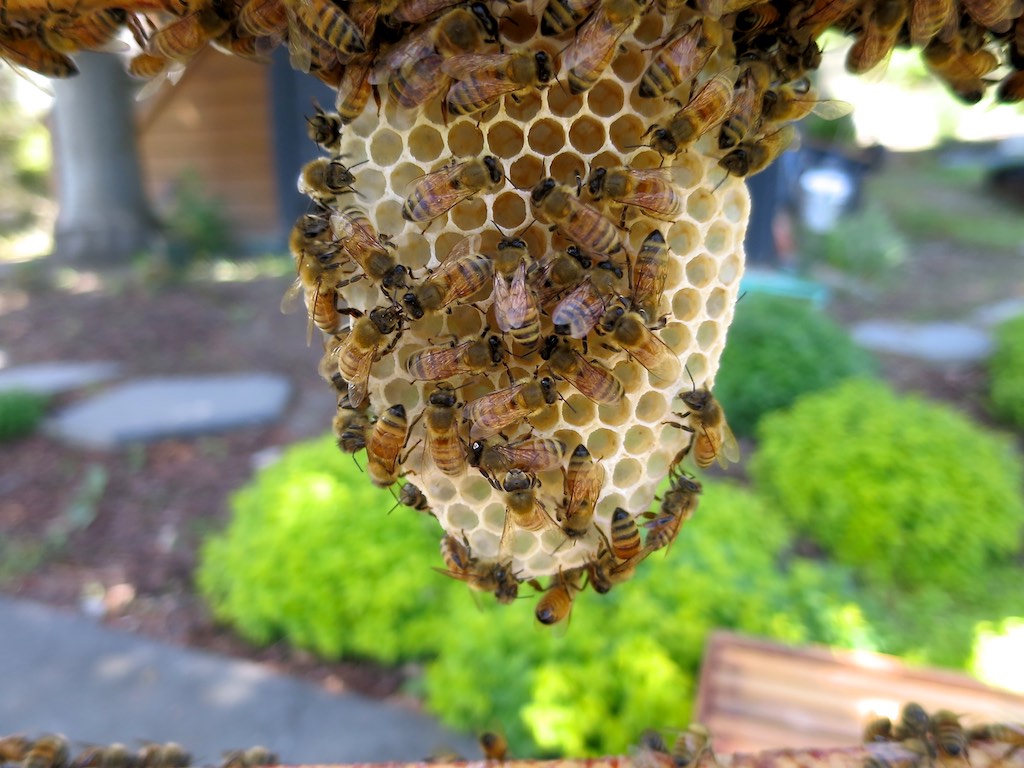
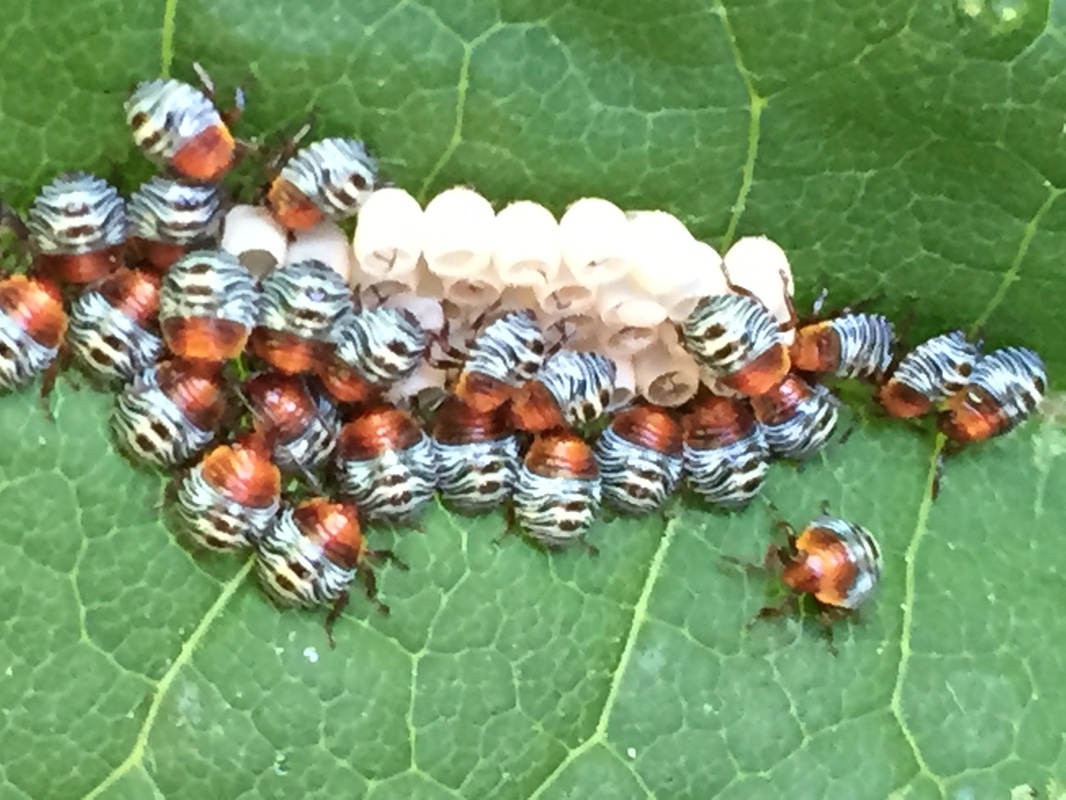
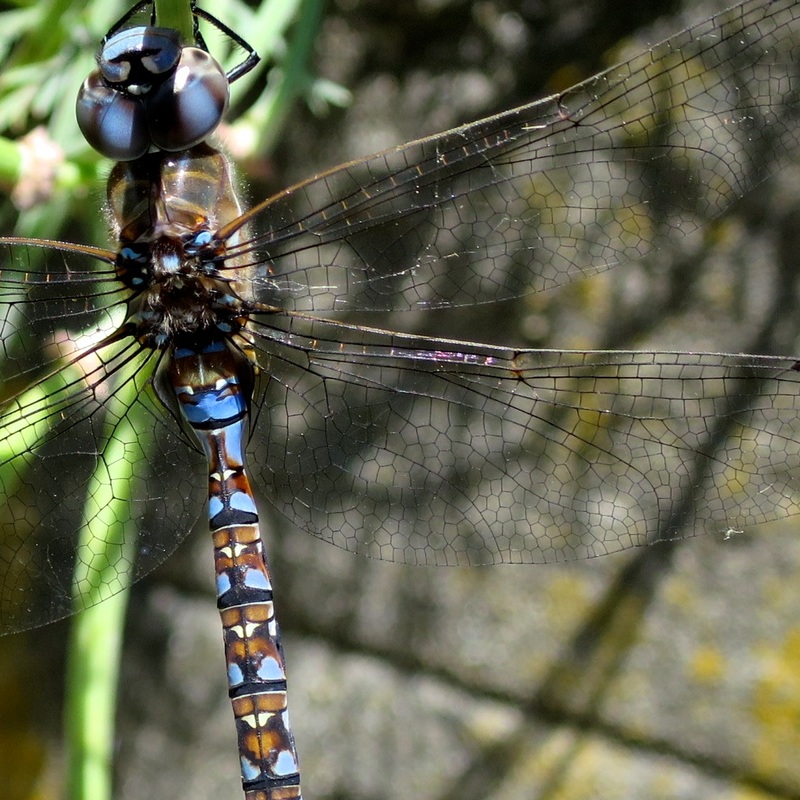
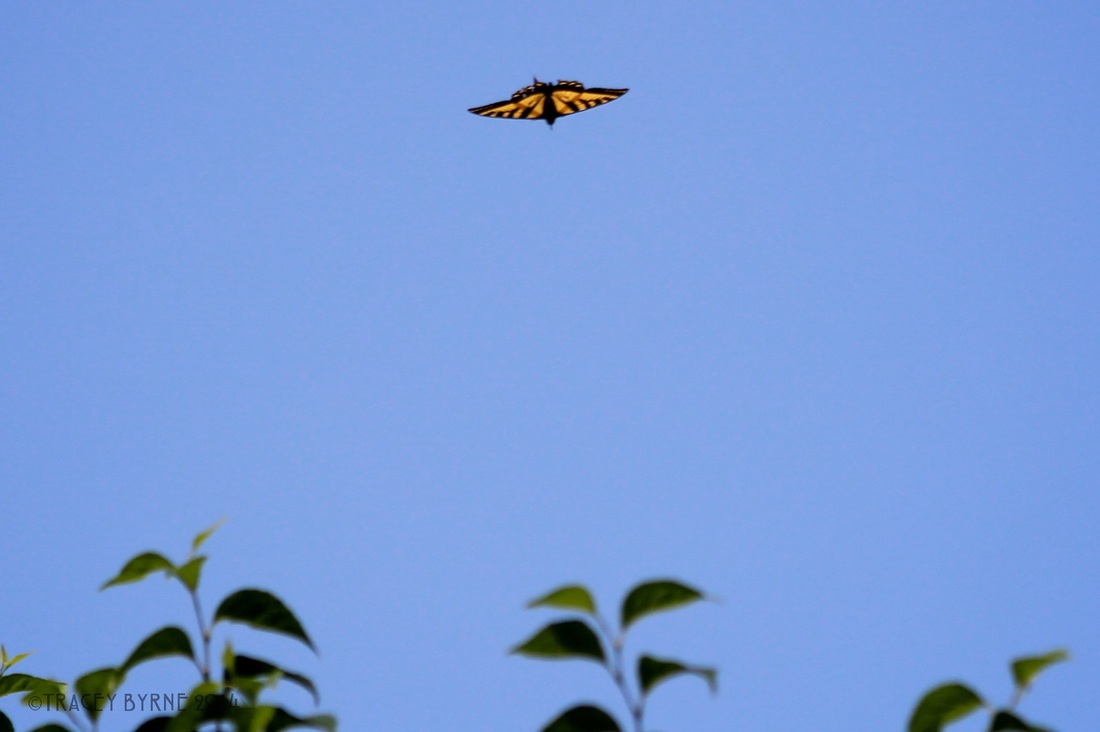
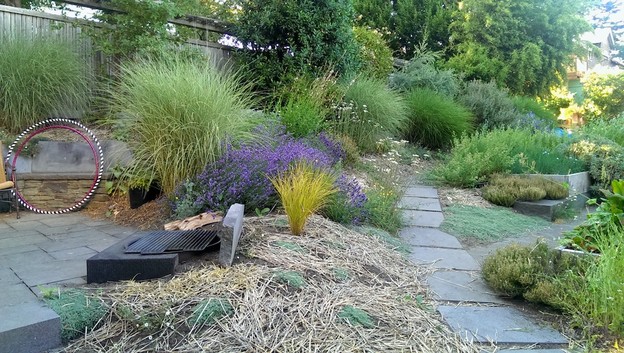
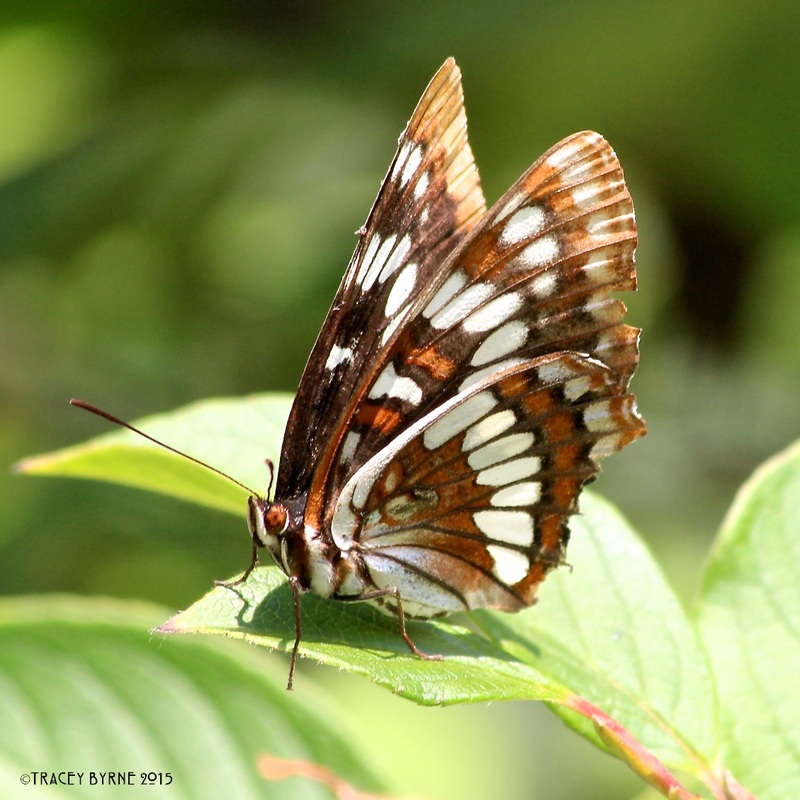
Things have been quite exciting in our backyard, with visits from some spectacular-looking insects. First, the dragonflies-who are exciting to watch as they patrol throughout the gloaming. Next, our bees continue to draw out honeycomb, which they are loading up with pollen and nectar from our thyme, mint, yarrow, borage, and lilac. The photo of the exquisite tiny jewel-like beetles was taken by our gardener, Marisa of Chrysalis Garden Care, so beautiful! Finally, we have been enjoying watching swooping swallowtail butterflies soaring up and over our backyard several times each week.

"New" butterfly sighting: okay, go ahead and laugh, but yesterday I was charged by a "pugnacious and territorial"* butterfly as I was heading out to the alley on our garden path. It turns out that the Red Admiral Vanessa atalanta males are known to rush intruders, including humans, before flying off erratically. Who knew?

*as described by James & Nunnalle, in Life Histories of Cascadia Butterflies
All photos ©T. Byrne (unless otherwise noted)
Picture
Picture
0 Comments

Lorquin's Admiral

7/7/2015

0 Comments

 
Picture
Picture
Picture
Perhaps the butterflies read Pacific Horticulture?

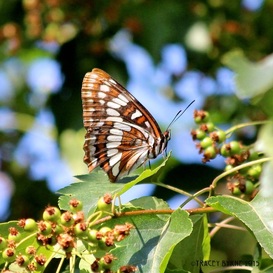
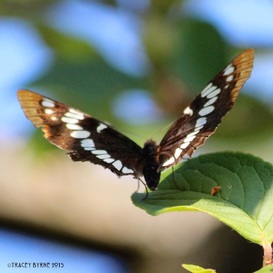
We were delighted to have this Lorquin's Admiral Limenitis lorquini make a visit to our backyard. It fluttered between our Stewartia and the Washington Hawthorne, apparently just basking in the sunshine. The adults sip flower nectar from plants (including California buckeye, yerba santa, and privet) and also enjoy feasting on bird droppings and dung (hmmmm, I wonder if the dairy manure compost we just brought in attracted this one?).

I do not know if any eggs were laid or if this was just a visit; regardless: it was a welcome sight and a relief from all the Cabbage Whites.

Bring on the native butterflies!
0 Comments

Look Up! The Billion-Bug Highway

6/10/2015

0 Comments

 
The Invisible Highway on Vimeo
Picture
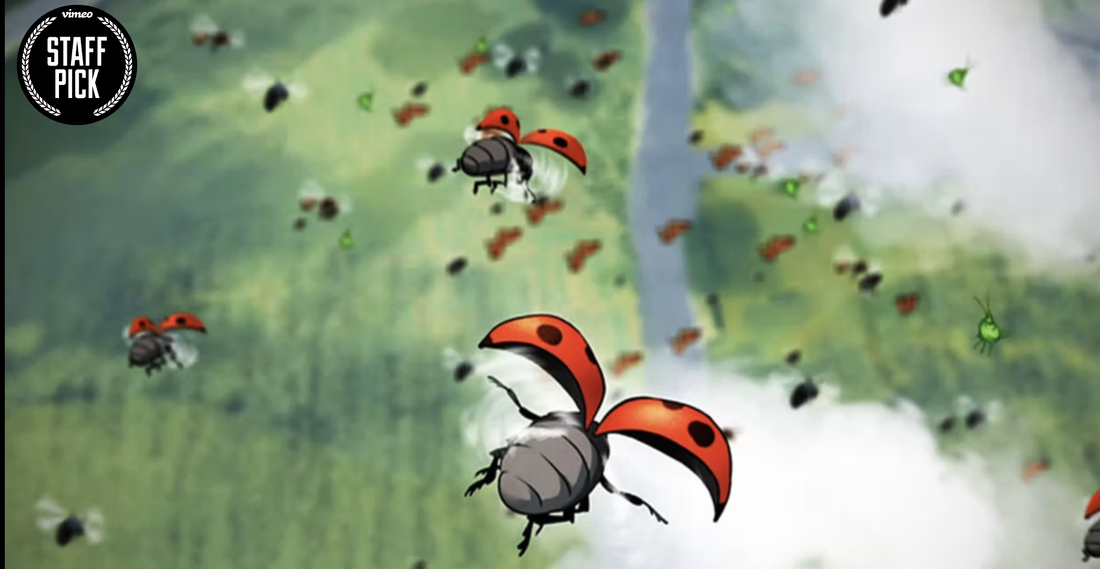
Any guesses on which insect has made it as high as 19,000 feet (Mt Logan in Washington)? or who regularly travels at 14,000 ft? or how many bugs are stacked over your head on a summer day?

Picture
*Arthropods are the most diverse life form on the planet.

*There are over 970,000 known species-out of an estimated 4 to 5 million.

*Of the 1.9 million recognized species, over ½ are insects!!!
The other ½ of lifeforms/species include non-insect arthropods, other invertebrates, plants, fungi & lichen (and finally) vertebrates.

*It is estimated that arthropods outnumber humans by as much as 250 million to 1.

Did you know? only 1% (about 10,000 species) of known insects are considered pests.

0 Comments

Spring Bug Eye-candy

3/6/2015

1 Comment

 
Picture
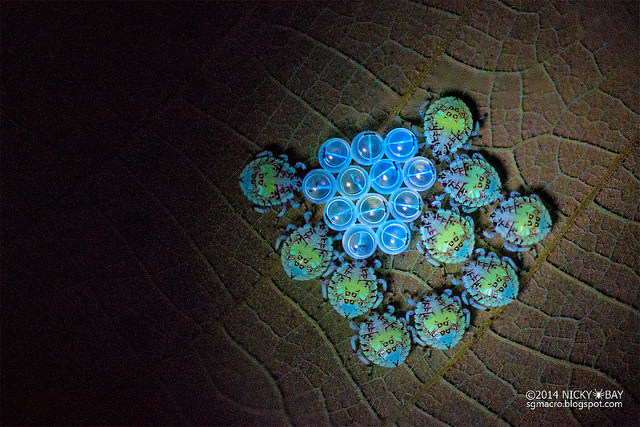
Ultraviolet stink bugs hatching 
Picture
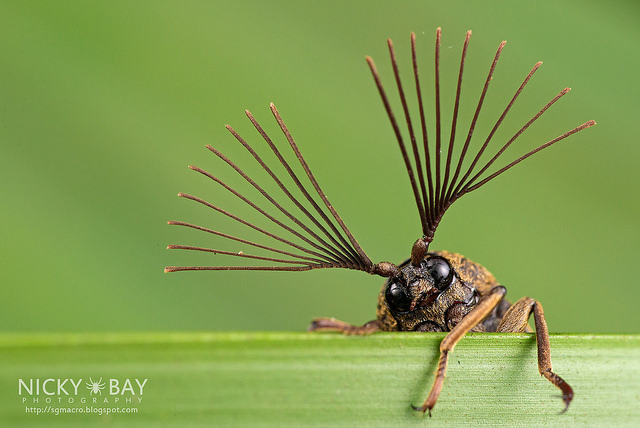
Cicada Parasite Beetle
Picture
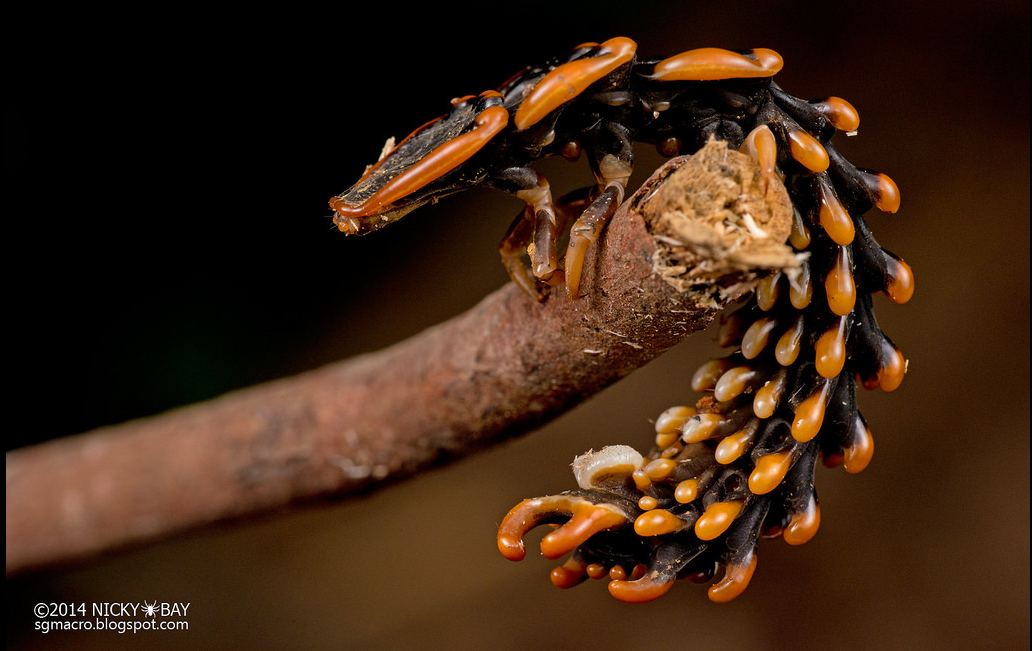
Trilobite Beetle Larva
Are you tired of laughing baby videos and photos of baby hedgehogs?
I would suggest a visit to Flickr for some extraordinary macro photography by Nicky Bay
1 Comment

Behold: the work of the potter wasp

8/30/2014

0 Comments

 
Picture
Picture
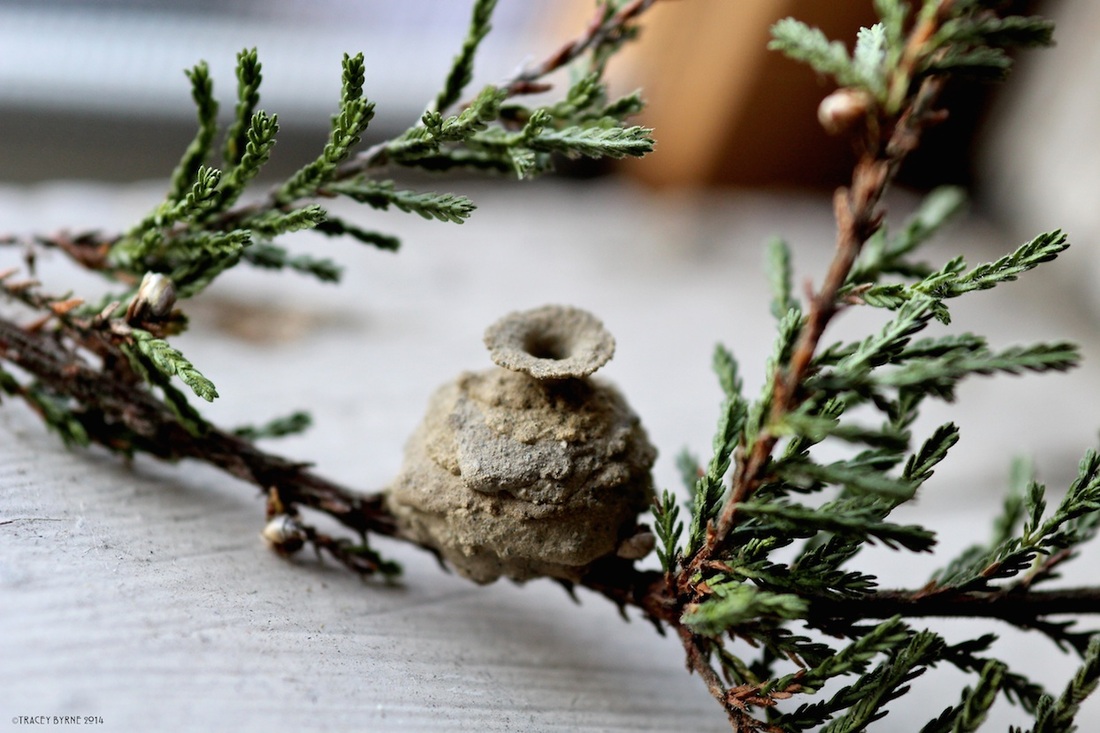
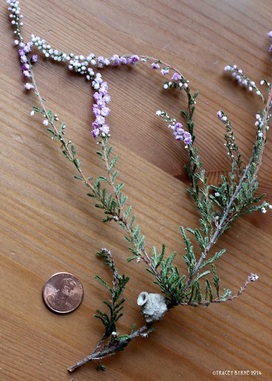
My garden fairy brought me a tiny gift the other day: this amazing little clay pot affixed to a branch. It looked like it had been thrown on a potter's wheel.

Wondering who might be the artist, I googled "insects that build tiny clay pots" and BOOM! Another blogger with a similar story and photos of the adult insect.

Not so strangely, the insect is called the Potter Wasp and it is a more skilled artisan than its larger relative the Mud Dauber. The Potter Wasp is a vespid and is considered a beneficial insect, as it hunts caterpillars which it paralyzes and seals inside the pot with an egg.

My little pot is not sealed, so I am guessing that the wasp was interrupted in its endeavor. The Bug Guy has more on the unsavory habits of the Potter Wasp in his bug-of-the-week post "Scary Potter".

0 Comments

Flesh fly or Sci-fi?

7/29/2014

0 Comments

 
Picture
Another rare bug sighting in my backyard:
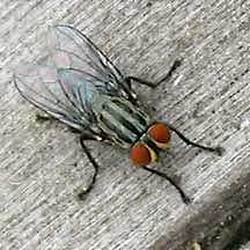
this crazy-looking zebra striped bug with bright red eyes and matching red booty was almost an inch long.  I spotted it walking along my garden box (if it had not been moving, I would have thought it was a toy bug, planted by a friend trying to trick me :^)

The Flesh Fly is from the family Sarcophagidae; yes, from the same Greek roots for sarcophagus: sarco=flesh and phage=eating.
_
Flesh Flies are viviparous, and they larviposit which means that they lay live young (baby maggots)
directly on the food source (wounds, dung, or carrion). It turns out that the adult Flesh Fly only drinks sweet fluids, like flower nectar, which is what it was after in my backyard.

Whatever you do, do not eat the larvae! Flesh Flies may-but not likely- carry leprosy.
Yuck. Not that you would. More interesting bits from the BugLady.
0 Comments

Bombus: Defying laws of physics-or not?

7/26/2014

2 Comments

 
Picture
Picture
Picture
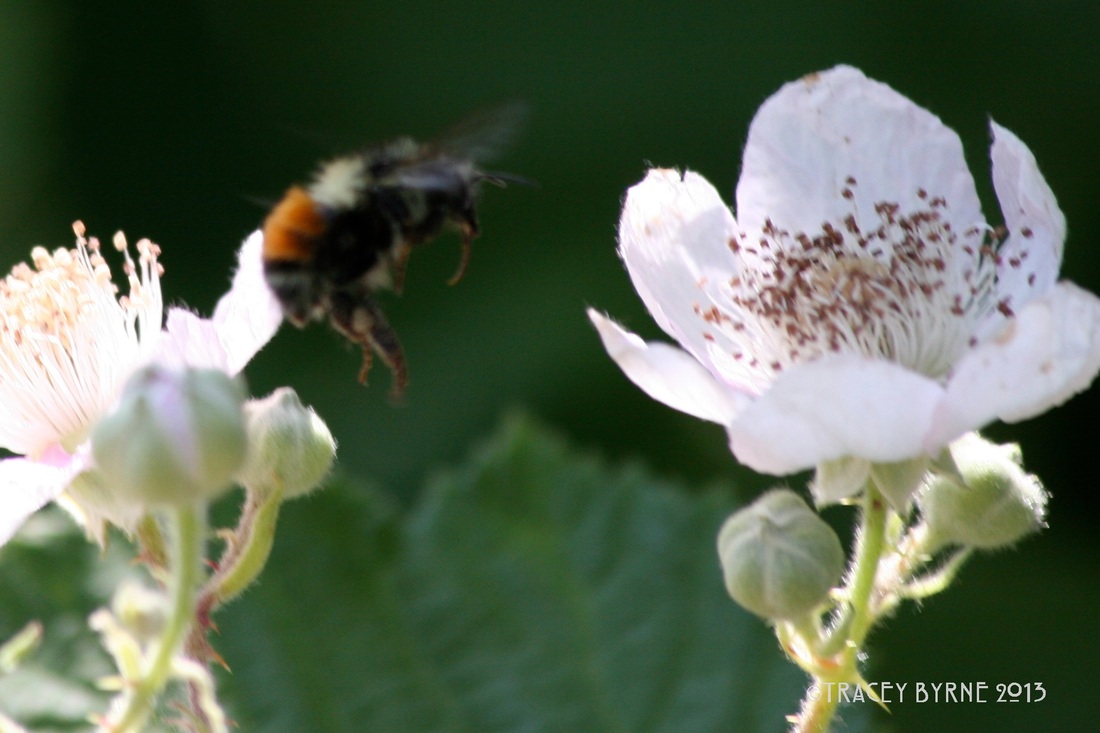
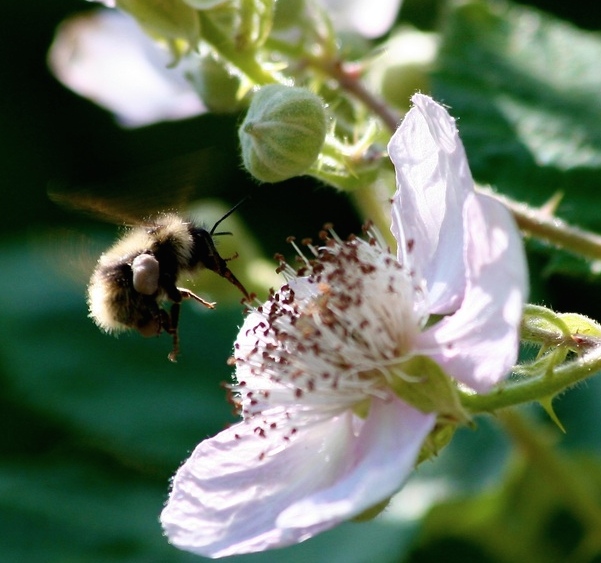
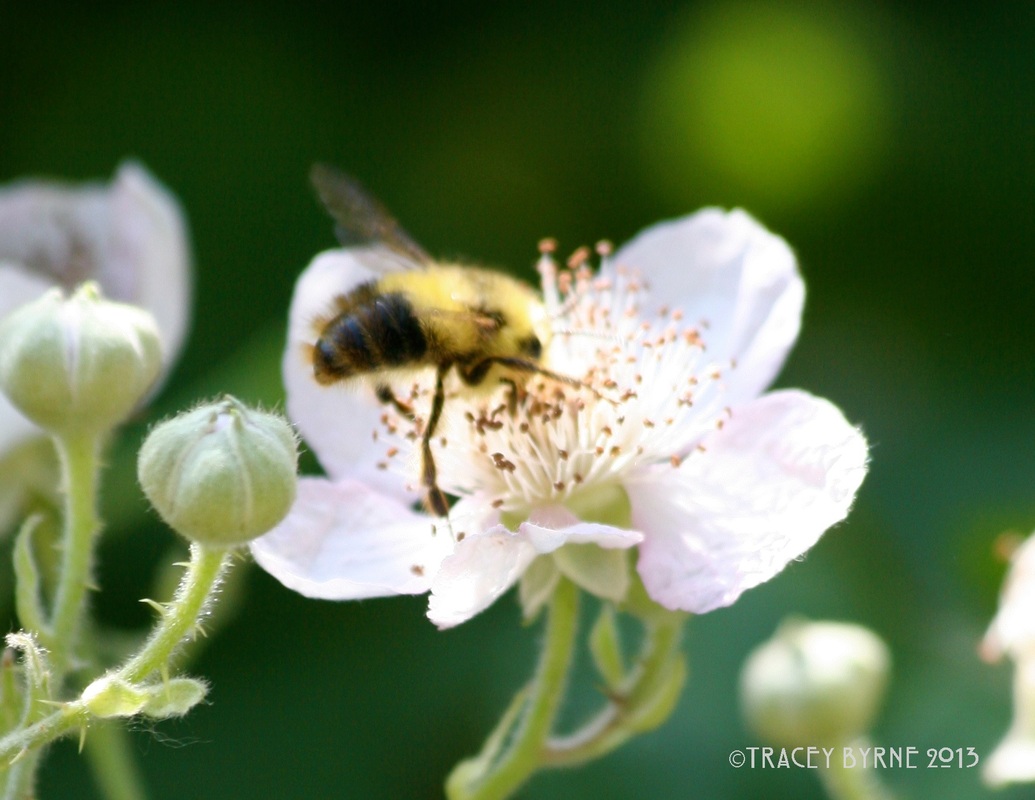
The blackberry patch on our hillside is definitely a bee magnet; some days I'll see five different species of bombus in addition to the honeybees, mason bees, and bee mimics.

Thank you bees...blackberry pies will be enjoyed in abundance this autumn!

Have you ever heard that bumblebees should not be able to fly as it would defy the laws of physics?  This story is a myth, but it is based on the science of how airplanes fly by creating lift with the angle of their wings.

It turns out that bumblebees are not built like airplanes; Karl Smallwood explains that the way that bumblebees fly is "
...by rotating their wings, which creates pockets of low air pressure, which in turn create small eddies above the bee’s wing which lift it into the air and, thus, grant it the ability to fly." In essence, they create mini-hurricanes and ride them out.

Bee ID: top  Bombus melanopygus;
middle
and bottom no confirmation ID (yet)

2 Comments

Balling a Yellowjacket

7/19/2014

0 Comments

 
Picture
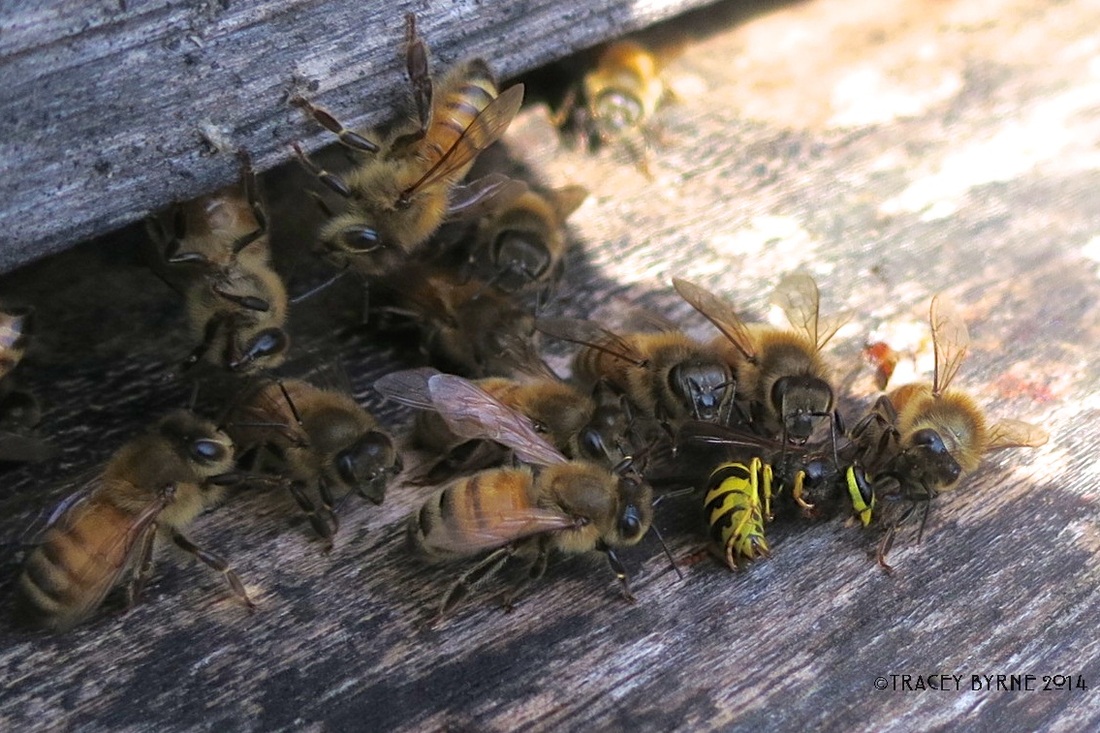
This time of year we find an abundance of yellowjackets stalking our honey bees, and yesterday I found these little ladies giving this yellowjacket a hard time. The bees are "balling" the yellowjacket, killing it with heat from their vibrations. I was happy to see them fighting back, as the yellowjackets rob honey, eat bee brood, and they take down our bee-girls as they return home laden with nectar and pollen. You Go Girls!

Want to know a little more about yellowjackets? Visit BeeFriendly, from Vancouver B.C.
0 Comments
<<Previous
Forward>>

    RSS Feed

    Author

    Tracey Byrne~

    I taught K-12 students from north of the Arctic Circle to the Puget Sound Ecoregion, garnering  40 years of experience as a classroom teacher, learning mentor, and private tutor. 

    I spent most of the 1980s and 90s in Alaska flying airplanes, floating wild rivers, winter camping, teaching, parenting, and living off the grid. 

    Here in Seattle, I am an advocate for environmental stewardship, place-based education, and outdoor play. I share my enthusiasm for birds, bugs, and backyards and have been a featured writer and photographer for Pacific Horticulture. 
    ​

    All photographs © T. Byrne unless otherwise noted.

    Picture
    Professional Reader

    Categories

    All
    Adventuring
    Amphibians
    Artists
    Beekeeping
    Biophilia
    Birds
    Bumblebees
    Citizen Science
    Cool Bugs
    Environmental Issues
    Flow Hive
    Fungi
    Gardening
    GMO
    Good Reads
    Guest Post
    Honeybee
    Infographic
    Organics
    Pesticides
    Pollinator
    Sky Matters
    Why
    Youtube Videos


    Archives

    December 2025
    November 2025
    October 2025
    September 2025
    August 2025
    July 2025
    June 2025
    April 2025
    November 2024
    June 2024
    April 2024
    February 2024
    December 2023
    November 2023
    September 2023
    June 2023
    April 2023
    March 2023
    January 2023
    December 2022
    October 2022
    August 2022
    July 2022
    April 2022
    March 2022
    February 2022
    January 2022
    December 2021
    September 2021
    May 2021
    April 2021
    March 2021
    February 2021
    December 2020
    November 2020
    October 2020
    September 2020
    August 2020
    June 2020
    May 2020
    April 2020
    February 2020
    January 2020
    December 2019
    October 2019
    September 2019
    July 2019
    June 2019
    May 2019
    April 2019
    February 2019
    January 2019
    December 2018
    November 2018
    October 2018
    September 2018
    August 2018
    July 2018
    June 2018
    May 2018
    April 2018
    March 2018
    February 2018
    January 2018
    December 2017
    November 2017
    October 2017
    September 2017
    August 2017
    July 2017
    June 2017
    May 2017
    April 2017
    March 2017
    February 2017
    January 2017
    December 2016
    September 2016
    August 2016
    July 2016
    June 2016
    May 2016
    April 2016
    March 2016
    February 2016
    January 2016
    December 2015
    November 2015
    October 2015
    September 2015
    August 2015
    July 2015
    June 2015
    May 2015
    April 2015
    March 2015
    February 2015
    January 2015
    December 2014
    November 2014
    October 2014
    September 2014
    August 2014
    July 2014
    June 2014
    May 2014
    April 2014
    March 2014
    February 2014
    January 2014
    December 2013
    November 2013
    October 2013
    August 2013